Thousands of South African homes, smallholdings, farms and businesses rely on boreholes – especially around Pretoria, where many plots and agricultural holdings have no municipal supply. Groundwater is often excellent quality, but it is never automatically safe. Municipal water is treated and monitored for you. Borehole water is your responsibility.
Why borehole water needs testing
Groundwater picks up whatever is in the rock and soil it flows through, and whatever seeps down from the surface. Most contaminants that matter for health can’t be seen, smelled or tasted. A borehole that delivered good water when it was drilled can change over time as septic tanks age, fertiliser use changes, new developments go up nearby or water levels drop in a drought.
The only way to know what is in your water is a laboratory analysis against a recognised standard – for drinking water in South Africa that is SANS 241.
What can be in your borehole water?
- Bacteria (E. coli and coliforms) – from septic tanks, pit latrines, French drains or livestock near the borehole. E. coli is the definitive indicator of faecal (sewage) pollution and the most important health risk in drinking water.
- Nitrate and nitrite – from fertiliser, animal manure and sewage. High nitrate is a particular concern for babies.
- Fluoride – occurs naturally at high levels in some South African groundwater and can cause dental and skeletal fluorosis with long-term use.
- Iron and manganese – cause a metallic taste, brown or black staining of basins and laundry, and can clog pipes and irrigation systems.
- Salts (high conductivity / TDS), sodium, chloride and sulphate – affect taste and can have a laxative effect at high levels.
- Hardness (calcium and magnesium) – not a health risk, but causes scale in kettles, geysers and pipes. See our Total Hardness test.
When should you test your borehole water?
- Before using a new borehole for drinking.
- When buying, selling or renting a property with its own water supply.
- At least once a year for household drinking water – more often if you have a septic tank, livestock or crops near the borehole.
- After floods or very heavy rain, repairs to the borehole or pump, or construction nearby.
- When the water changes in taste, smell, colour or clarity.
- Before using the water for livestock, irrigation, a guest house or a food business, or for bottling and selling.
Tip: if anyone in your household has repeated stomach upsets, speak to your doctor – and have the water tested so you can rule it in or out.
Which test do you need?
| Your situation | Recommended test | Price |
|---|---|---|
| You drink the water or use it in the house | Drinking Water Test – SANS 241 | R2 700 |
| Quick check for sewage / bacterial contamination | Bacteria Test – E. coli & Total Coliform | R900 |
| Scale in kettles, geysers and pipes | Total Hardness | R750 |
| Irrigating crops, orchards or gardens | Agricultural & Irrigation (incl. SAR) | R2 710 |
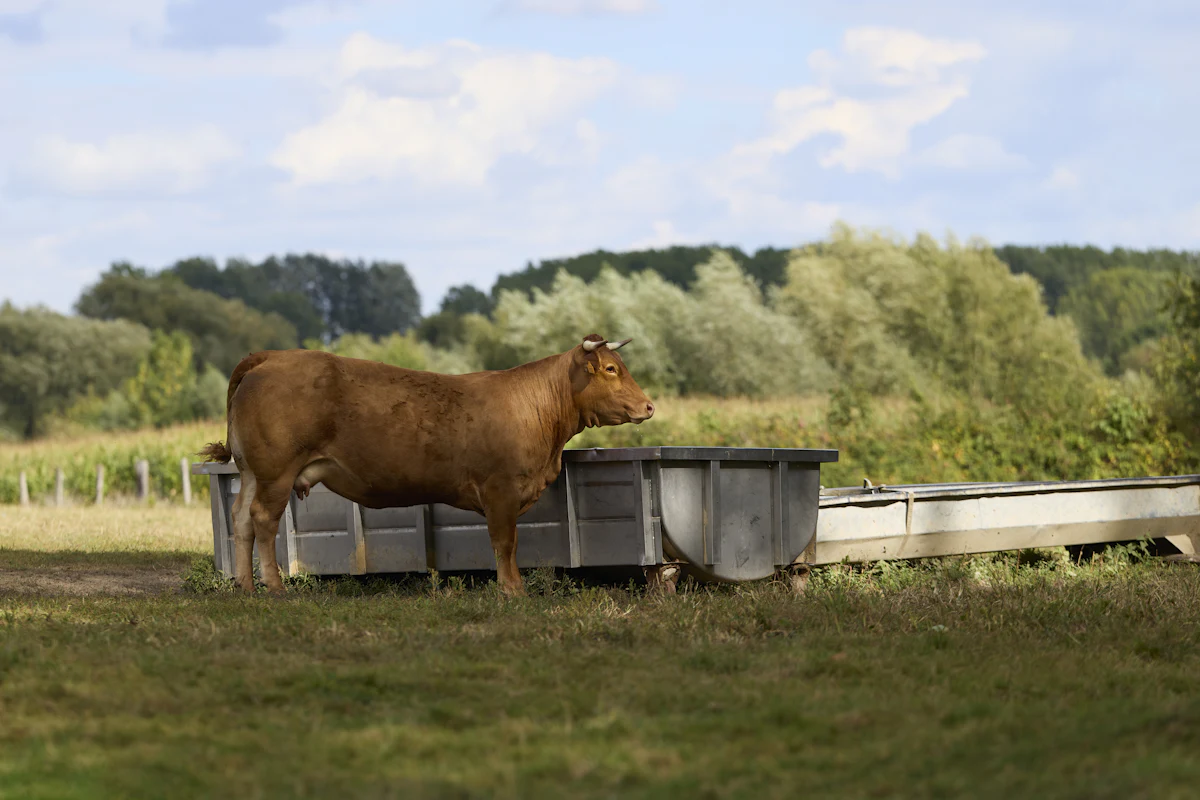
| Watering cattle, sheep, game or poultry | Livestock Watering | R3 250 |
For a household on borehole water, the SANS 241 drinking-water test is the one to start with: it covers the microbiological, physical, aesthetic and chemical determinants in one analysis.
How to take a borehole water sample
A test is only as good as the sample. When you order, we send you our sampling guidelines – and we arrange a courier to collect your sample at no extra cost. The general principles are:
- Sample from a tap as close to the borehole as possible – before any storage tank, filter or softener (unless you want to test the treated water).
- Remove any attachments such as hoses or aerators, and clean the tap.
- Let the water run for 2–3 minutes so you sample fresh water from the borehole, not water that has been standing in the pipes.
- Bacteria sample: use a sterile sample bottle (ask us if you don’t have one). Don’t rinse it, don’t touch the inside of the bottle or cap, and don’t let the bottle touch the tap. Fill, close tightly.
- Chemical sample: rinse the bottle with the water a few times, then fill to the top and close tightly.
- Label each bottle with the date, time and sampling point.
- Keep the bacteria sample cool (in a cooler box, not frozen). Bacteriological samples should reach the lab within 24 hours – which is why we coordinate the courier collection with you.
Understanding your results
Your report compares each measured value with the limits in SANS 241. Water that complies with the standard is considered safe for lifetime consumption. If something doesn’t comply, the report shows exactly which parameter is the problem – and that determines the solution. For example, bacterial contamination is usually addressed with disinfection (such as chlorination or UV) and by fixing the source, while high nitrate or salts need treatment like reverse osmosis. Iron and manganese have their own filtration options.
Because the right treatment depends on the result, test first, then treat – and test again after installing any treatment to confirm it works. Our scientist is happy to talk you through your report.
Test your borehole water
SANS 241 drinking-water analysis for R2 700, or a quick bacteria test for R900. We send a courier to collect your sample – free, anywhere in South Africa.